Cost Guide
Custom Cabinet Cost in Santa Maria CA
Per linear foot ranges for California, what a full kitchen runs by material, and the line items that quietly move a quote. Every figure names its source.
Read guide →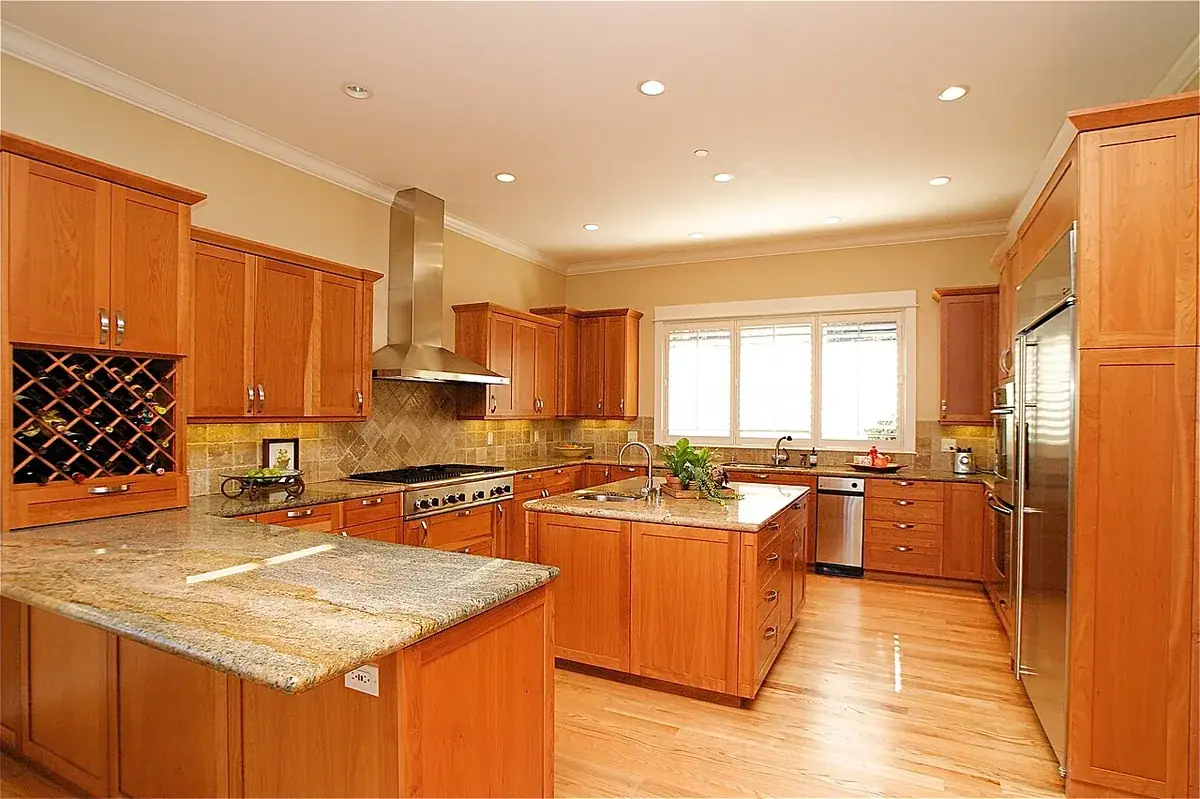
Kitchen cabinets, bathroom vanities, refacing and installation, built to the room you actually have. Custom cabinets in Santa Maria CA start with a measure in your kitchen and an itemised written quote, with a CSLB licence number on it.
Cabinet work in California is the C-6 classification, Cabinet, Millwork and Finish Carpentry. The licence number goes on your quote so you can check it on the CSLB register before you sign anything.
Cabinet by cabinet sizes, box material, door style, finish, hardware and what the install covers. California requires a written contract over $500 and requires start and completion dates on it.
A home improvement downpayment in California cannot exceed $1,000 or 10 percent of the contract, whichever is less. Anyone asking for half up front is asking you to waive your own protection.
Every quote starts with a field measure in the room. Out of square walls and 1950s framing are normal here and they are exactly what a catalogue size cannot absorb.
Five distinct jobs, each with its own page, because a kitchen full of new cabinets and a vanity swap in a hall bath are not the same project and should not be quoted as if they were.
Most kitchens do not fail all at once. They fail one drawer at a time, and the particleboard under the sink usually goes first. If two or more of these describe your kitchen, it is worth getting a measured quote before something structural gives.
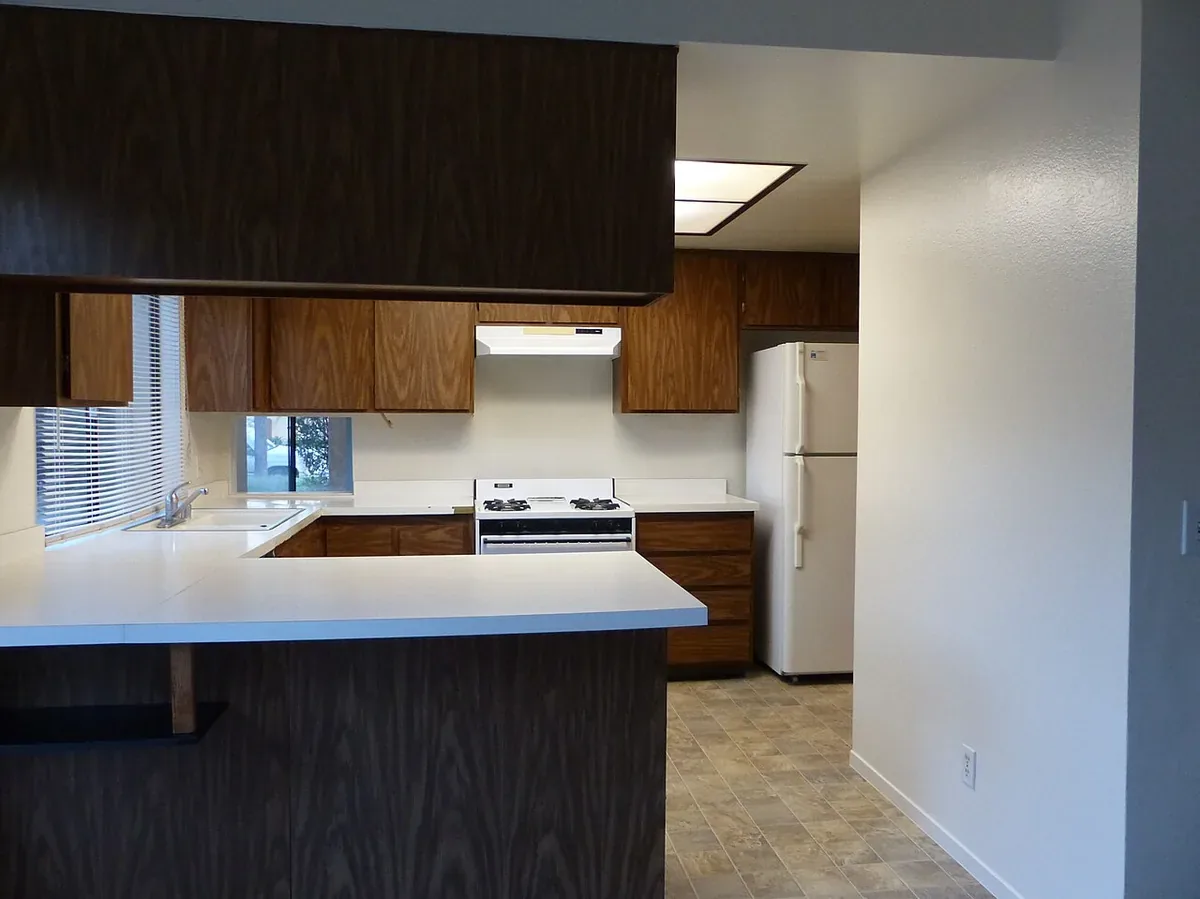
Stock cabinets come in fixed widths, normally 3 inch increments, and anything left over gets covered with a filler strip. That is fine in a new build where the walls are square and the plan was drawn around the catalogue. It is much less fine in a 1950s or 1960s house near downtown Santa Maria, where walls are rarely square, the ceiling height changes across the room, and a soffit was framed by somebody working to a different standard.
Custom removes the grid. The run ends where your wall ends. The cabinet beside the range is the width it needs to be. A corner gets a purpose built solution instead of a dead void behind a false front. Installed per cabinet, Thumbtack puts stock at $75 to $400, semi custom at $150 to $900 and custom at $500 to $1,400, so the premium is real and it buys fit rather than decoration.
Read the full custom vs semi custom vs stock comparison →Custom cabinets run $500 to $1,200 per linear foot in California, which is the range cabinet makers publish statewide. Central Coast labour sits below Los Angeles and Bay Area rates, so Santa Maria quotes usually land in the lower half of that band. These are published California and national ranges, not Santa Maria specific quotes, and they exist to tell you whether a number you have been given is sane.
| Tier | Installed per cabinet | What you can change |
|---|---|---|
| Stock | $75 to $400 | Finish and door style from a fixed catalogue. Sizes are fixed, normally 3 inch increments. |
| Semi custom | $150 to $900 | Catalogue base, but sizes, finishes and some interior fittings can be modified. |
| Custom | $500 to $1,400 | Everything. Built to your measured dimensions with no catalogue grid. |
Source: Thumbtack cost data, national figures. Use them to sanity check a quote, not as a Santa Maria price list.
| Material | Standard kitchen | Notes |
|---|---|---|
| Solid hardwood | $5,000 to $25,000 | Maple, cherry, oak and pine all sit inside this band. |
| Wood veneer | $1,900 to $13,000 | Veneer over a composite or plywood core. |
| Laminate | $4,000 to $15,000 | Durable and easy to clean, limited to flat and simple profiles. |
Source: Thumbtack cost data, national figures for a standard sized kitchen.
Seven stages, in this order. The two that people skip and later regret are the in home measure and the written scope, and California law effectively requires the second one anyway.
Somebody comes to the house and measures the room, not the floor plan. Wall lengths, out of square corners, window and door casing, soffit height, where the gas line and the waste stack actually sit, and how the appliances you already own will fit. Santa Maria has everything from 1950s bungalows near downtown to post 2000 tract homes on the east side, and the out of square walls in an older house are exactly what a catalogue cabinet cannot absorb.
You get a drawn layout and an itemised quote: cabinet by cabinet sizes, box material, door style, finish, hardware, and what the install includes. California requires a written home improvement contract for anything over $500 under Business and Professions Code 7159, so this step is not optional courtesy, it is law. The contractor licence number belongs on that document.
Pick the box material, the door style and the finish, in that order, because the box decides durability and the door decides price. Plywood boxes cost more than particleboard and hold up to a slow sink leak in a way particleboard never does. If the boxes use composite panel, ask to see the TSCA Title VI compliance label.
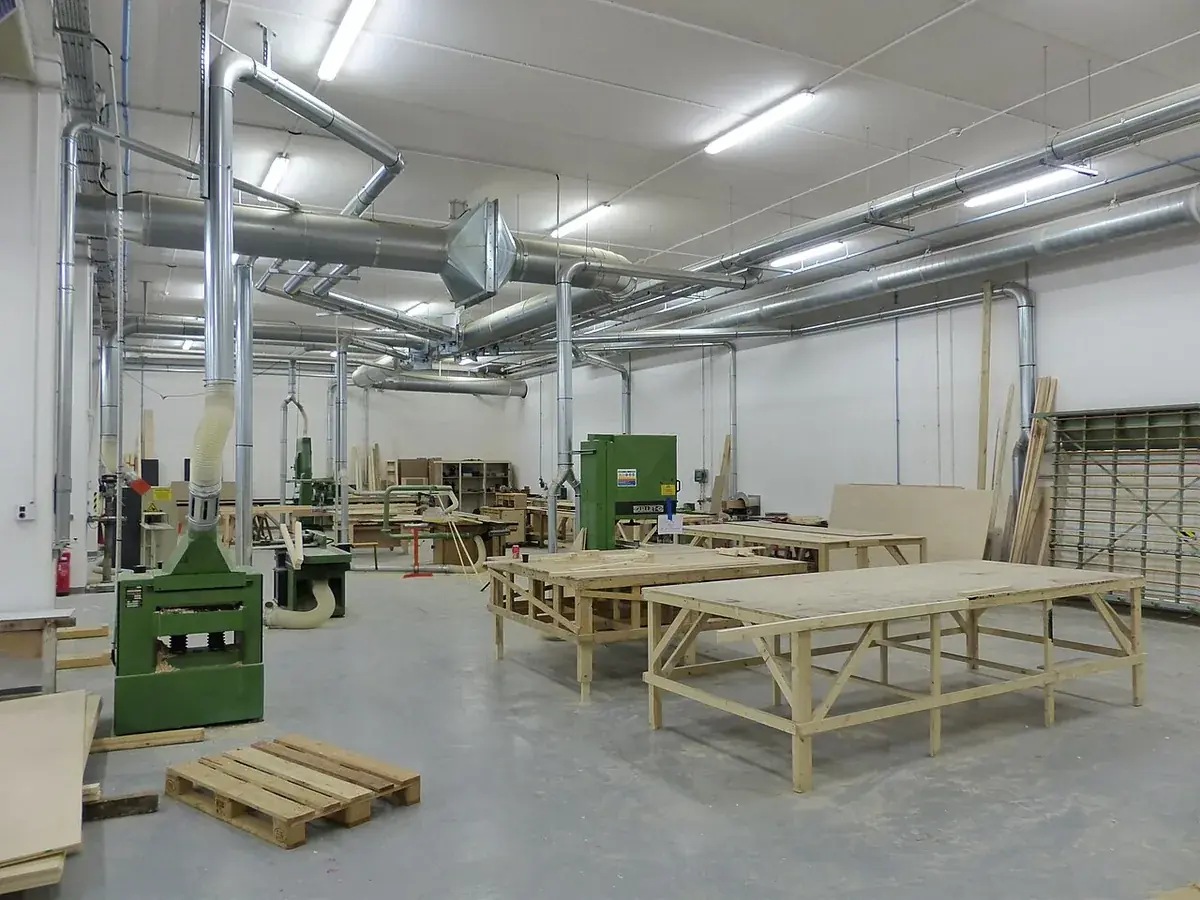
The boxes, face frames, doors and drawers get cut and assembled in the shop. This is the stage that separates custom from semi custom: nothing is being pulled from a catalogue in fixed 3 inch widths, so the run ends where your wall ends instead of ending in a filler strip.
Stain, paint or clear coat goes on in the shop under controlled conditions, then has to cure before anything gets handled or stacked. A finish applied on site in a lived in kitchen is never as even, and never as hard, as one sprayed and cured in a shop.
Old cabinets come out, the crew finds the studs, sets a level line, and hangs uppers before bases so nobody is reaching over a counter. Boxes get shimmed plumb, screwed to studs and to each other, then doors and drawers are hung and adjusted. Soft close hinges and slides get dialled in here, not at the factory.
Stone and quartz counters are templated off the installed cabinets, not off the drawing, which is why the counter fabricator comes after the cabinets are set rather than before. Then the punch list: door alignment, drawer travel, scribe moulding at the walls, toe kick, and filler at the end of a run.
Cabinets are only as straight as the line they were hung to. A base run gets shimmed plumb off the highest point of the floor, screwed into studs rather than drywall, and fastened to its neighbours so the whole run behaves as one piece. Get that wrong and the doors will never line up, the counter will rock, and the drawers will drift out of adjustment within a year.
It also has to happen in the right order. Uppers before bases, so nobody works over a finished counter. Counter template after the cabinets are installed, because the fabricator measures the real cabinets rather than the drawing. Scribe moulding and toe kick last, once everything is plumb.
Cabinet installation in Santa Maria CA →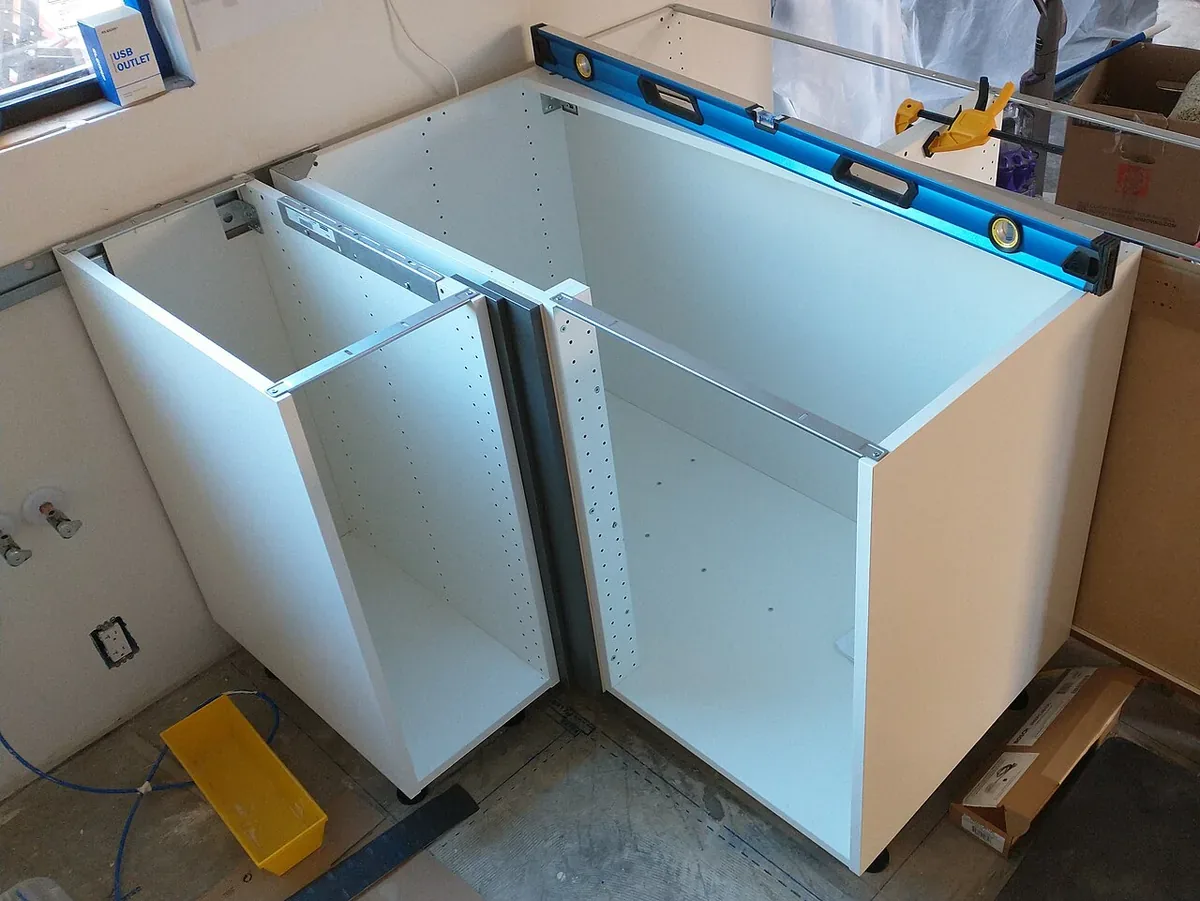
Santa Maria is the largest city in Santa Barbara County, with 109,707 residents at the 2020 Census, and the valley around it carries the rest of the work: Orcutt and Sisquoc in unincorporated Santa Barbara County, the City of Guadalupe out toward the dunes, Los Alamos and Lompoc to the south, and Nipomo just north across the Santa Maria River.
Nipomo is the one worth flagging: it sits in San Luis Obispo County, not Santa Barbara County, so if your job does trip a permit the paperwork goes to a different jurisdiction. The cabinets are identical. The counter over the permit desk is not.
Tell us the room and what you want built. You get a layout, an itemised scope and a number in writing, with a licence number on the document and no obligation attached.
Three long guides covering the questions that decide the budget: what it costs, what the state actually requires, and which tier of cabinet you need.
Per linear foot ranges for California, what a full kitchen runs by material, and the line items that quietly move a quote. Every figure names its source.
Read guide →Swapping cabinets in place is exempt finish work under the state code. Moving plumbing, gas or circuits is not. Plus the CSLB licence, the downpayment cap and the cancellation window, quoted from the statute.
Read guide →What the three tiers actually cost per cabinet installed, where each one stops being able to help you, and how to read the TSCA Title VI formaldehyde label on the box.
Read guide →Budget $500 to $1,200 per linear foot for true custom cabinets in California, which is the statewide range published by cabinet makers including Ronbow. Thumbtack's national project data puts a typical custom cabinet project at $1,447 to $5,294 with an average of $2,817, and a low and high of $552 and $13,423, because that figure counts small jobs as well as whole kitchens. Central Coast labour sits below Los Angeles and Bay Area rates, so Santa Maria quotes usually land in the lower half of the California band. The only number that matters is the one written after somebody measures your room.
The difference is who decides the dimensions. Stock cabinets come in fixed widths, usually 3 inch increments, and you fill the leftover space with filler strips. Semi custom starts from a stock catalogue and lets you change sizes, finishes and some interior fittings. Custom is built to your measurements with no catalogue at all. Installed per cabinet, Thumbtack puts stock at $75 to $400, semi custom at $150 to $900, and custom at $500 to $1,400.
Usually no, because the California Residential Code lists "painting, papering, tiling, carpeting, cabinets, counter tops and similar finish work" as work exempt from permit under Section R105.2. Swapping cabinets into the same footprint is finish work. The moment the job moves a sink, relocates gas, or adds or moves circuits and outlets, you are into plumbing, mechanical and electrical work that needs a permit. Local jurisdictions can amend the exempt list, so confirm your specific job with the City of Santa Maria Building Division, or with Santa Barbara County Planning and Development if you are in Orcutt or another unincorporated area.
Yes, for any cabinet job of real size. California Business and Professions Code section 7048 exempts work only where "the aggregate contract price for labor, materials, and all other items is less than one thousand dollars ($1,000)", the work is of a casual, minor or inconsequential nature, and it does not require a building permit. A kitchen of cabinets is far past $1,000, so the contractor needs a licence. The specialty classification is C-6, Cabinet, Millwork and Finish Carpentry, and you can check any licence number free on the CSLB register.
Yes, by a wide margin, as long as your existing boxes are sound. Laminate refacing in Santa Maria runs $1,525 to $2,391 for a standard 12 cabinet kitchen according to homeyou's cost model for this city, which works out to about $127 to $199 per cabinet. Wood veneer refacing is estimated at $2,000 to $6,000 for the same kitchen. Compare that against $500 to $1,400 per cabinet installed for custom replacement and the maths is obvious. The catch is that refacing keeps your current layout, your current box sizes and your current interior condition.
Look for the TSCA Title VI compliance label on any composite wood in the cabinet. Hardwood plywood, medium density fibreboard and particleboard, and finished goods containing them such as cabinets, are covered by the EPA's formaldehyde emission standards under Title VI of the Toxic Substances Control Act, and since 22 March 2019 those products must be labelled as TSCA Title VI compliant by an EPA recognised third party certifier. The federal limits match California's own CARB Airborne Toxic Control Measure Phase 2 limits, which have applied in this state since 2009. Solid wood is not a composite panel and is not regulated the same way.
Eighteen answers in total, covering cost, permits, licensing, contracts, materials and hardware.
See the full Santa Maria cabinet FAQ →Send the room, the town and roughly what you want built. You get a measured, itemised quote with a licence number on it and no obligation.
Get a Free Quote