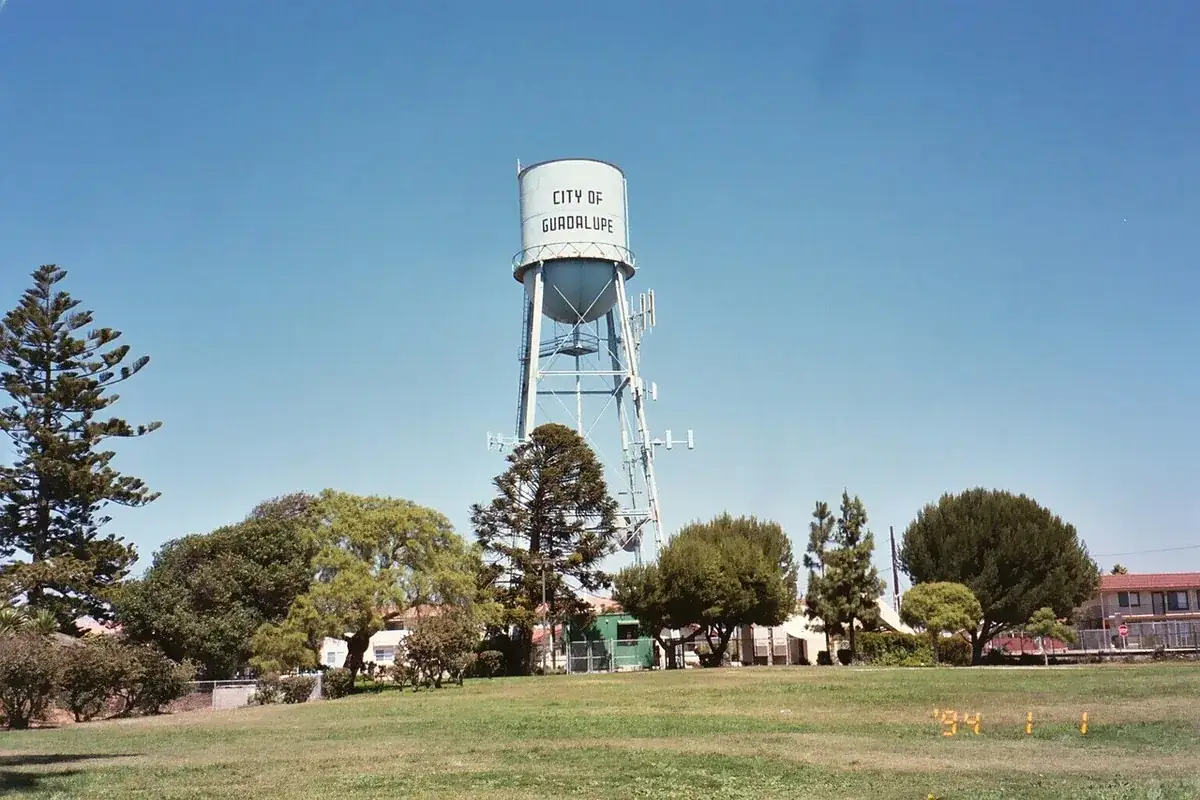
A small farm town between the river and the dunes
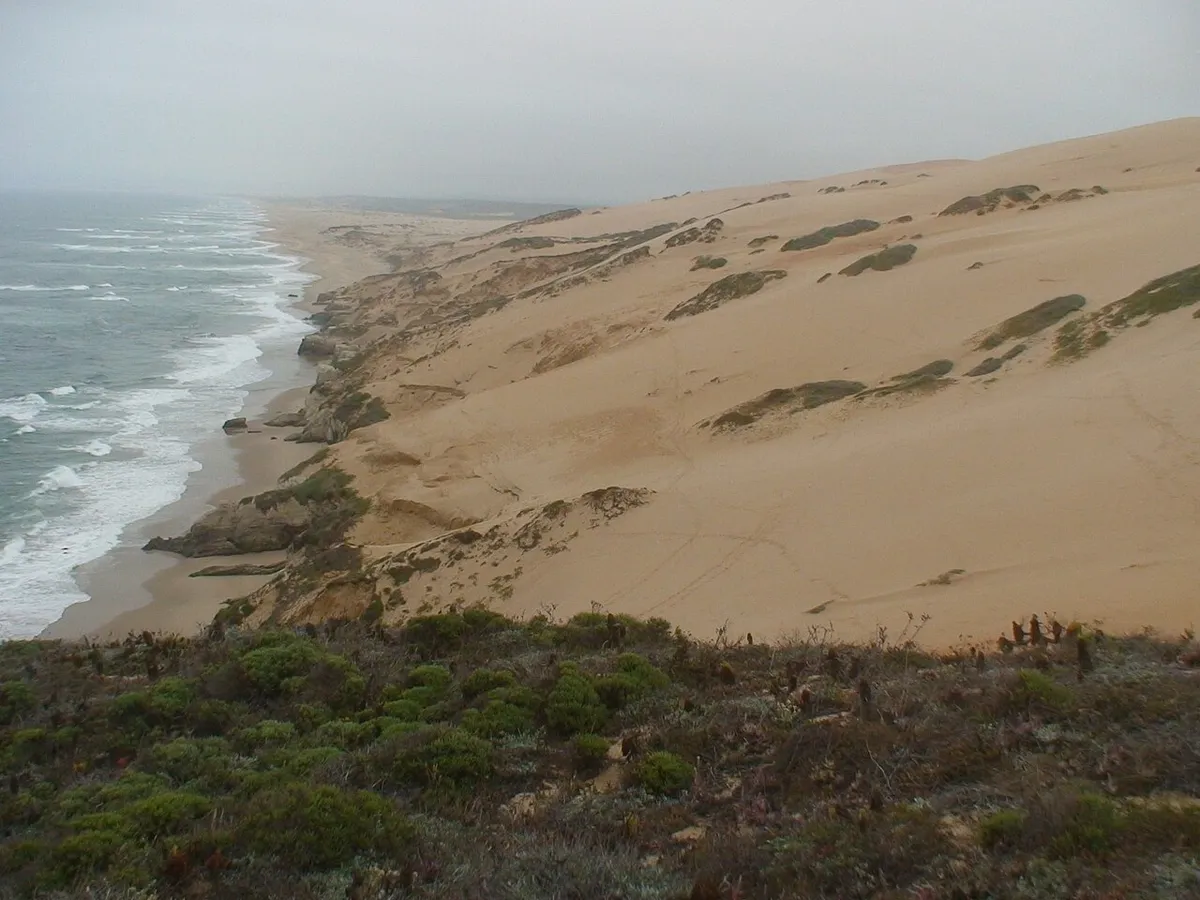
Guadalupe sits at the junction of Highway 1 and Highway 166, immediately south of the Santa Maria River, about eight miles west of Santa Maria and five miles east of the Pacific. It covers only about 1.3 square miles, a tight cluster of buildings surrounded by farmland, and counted 8,057 residents in the 2020 census. West of town lie the Guadalupe-Nipomo Dunes, and to the south the hills that separate it from Vandenberg.
The history runs deep for a town this size. The Portolá expedition camped nearby on 1 September 1769, the land became part of the Rancho Guadalupe grant in 1840, and the city incorporated on 19 May 1946. Masatani's Market has been run by the same family since 1922, and the Royal Theater on Highway 1 dates from 1939. Agriculture is still the main industry, with about 31 percent of workers in farming and 24 percent in manufacturing, much of it produce cooling and packing.
Permits: City of Guadalupe Building Department
Inside city limits, permits come from the City of Guadalupe Building Department at 918 Obispo Street, not from Santa Barbara County. The city lists JAS Pacific as its building inspector and official. Applications are filed with three sets of plans, and building inspections happen on Tuesdays and Thursdays. Two inspection days a week is a real scheduling factor: if a plumber or electrician has to pass a rough inspection before the cabinets go in, the installer's start date depends on it.
Cabinets alone, swapped in the same positions, are finish work that the California Residential Code exempts from permit. Moving a sink, running a new gas line, adding circuits or taking out a wall is the part that brings in the city.
Marine air and what it does to cabinets
Guadalupe has a warm summer Mediterranean climate with no average monthly temperature above 71.6°F, and at five miles from the shore it gets more damp, salty marine air than the inland valley towns. That shows up on cabinets in predictable places.
- Box material: plywood tolerates damp far better than particleboard, which swells permanently once it gets wet and never recovers its thickness.
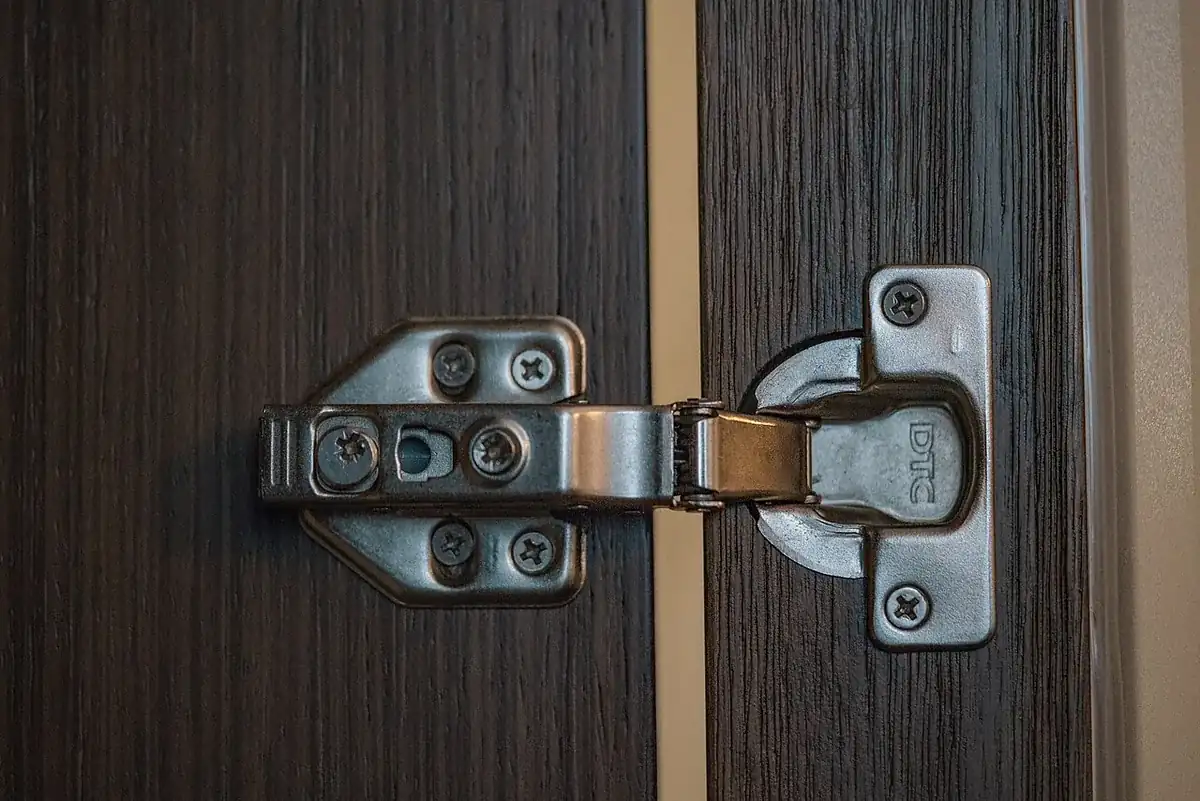
- Hardware finish: cheap plated pulls and hinges spot and pit sooner in salt air. Stainless steel or solid brass hold up longer.
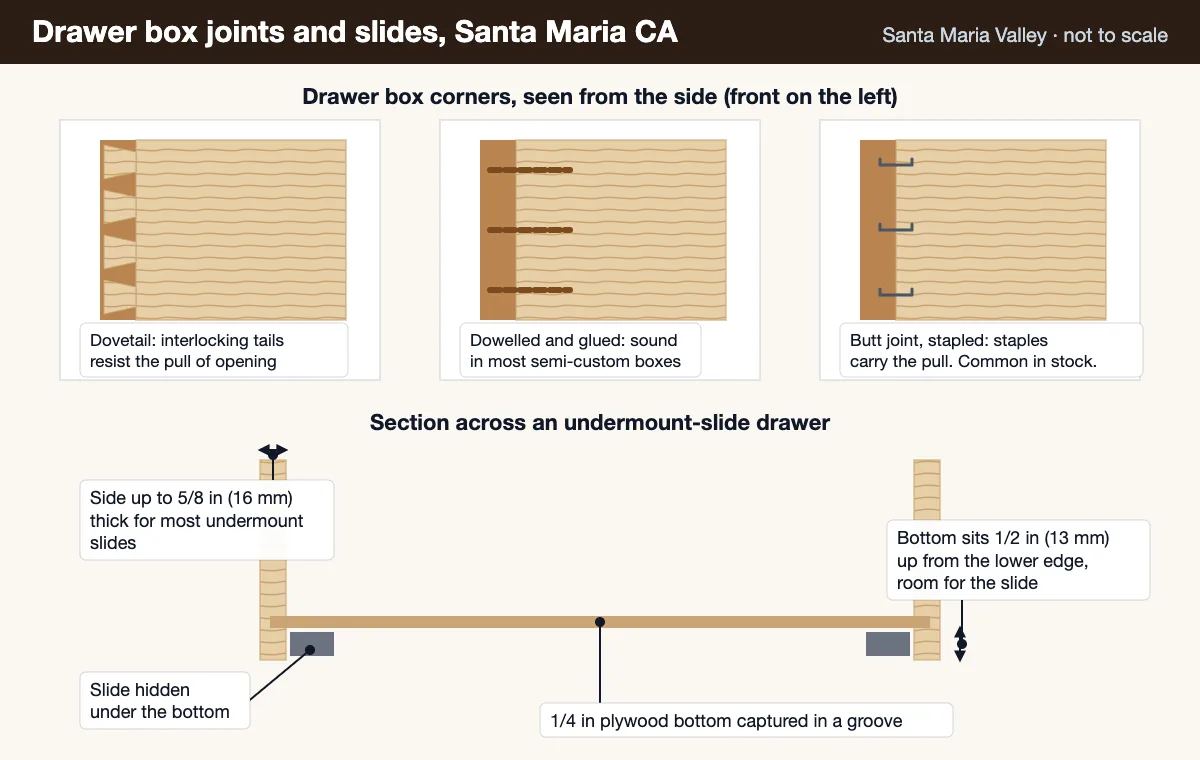
- Hinges and slides: buy from an established maker. Corroded, gritty slides are the first thing to fail on a coastal kitchen.
- Sink base: a sealed or laminated floor panel turns a slow leak into a cleanup instead of a replacement.
- Ventilation: a ducted range hood and a bathroom fan that runs long enough to clear the steam protect the uppers and the vanity.
What Guadalupe housing tends to need
Older homes in the original town
The historic core around Guadalupe Street has houses that have seen decades of coastal weather and more than one remodel. Expect out of square walls and mixed cabinet depths, and check exterior wall base cabinets for moisture before deciding between refacing and replacing.
Pasadera and newer construction
On the south side of town, the long running Pasadera project, first announced in 1993 on a 209 acre site the city annexed in 1995, is planned to add more than 800 homes. Newer houses like these suit semi custom boxes, and the money is better spent inside the cabinets on drawers, pull outs and quality slides than on fully custom carcasses.
Services available in Guadalupe
Guadalupe is covered for custom cabinets, kitchen cabinets, bathroom vanities, cabinet refacing and cabinet installation. Ranges for budgeting sit in the cost guide. The rest of the coverage area is on the service area page, and project details can be sent from the contact page.
Sources
- Wikipedia: Guadalupe, California →Location, size, 2020 census count, incorporation date, Pasadera, the Royal Theater, Masatani's Market, employment by sector and climate.
- City of Guadalupe: Building Department →Office address, the JAS Pacific building official listing, plan sets and the Tuesday and Thursday inspection days.