What a bathroom vanity costs in Santa Maria, CA
A custom vanity is usually the cheapest way to buy custom cabinetry, because it is a small number of cabinets. Thumbtack puts custom work at $500 to $1,400 per cabinet installed, so a single vanity built as one cabinet sits near the bottom of that and a double vanity built as two or three boxes with a drawer bank in the middle sits well above it. The California per linear foot range for custom cabinetry, $500 to $1,200, applies here too: a 60 inch double vanity is five linear feet.
| Vanity | Typical width | What the build involves |
|---|---|---|
| Small single | 24 to 30 in | One box. Plumbing usually runs straight through the back, so doors rather than drawers below the bowl. |
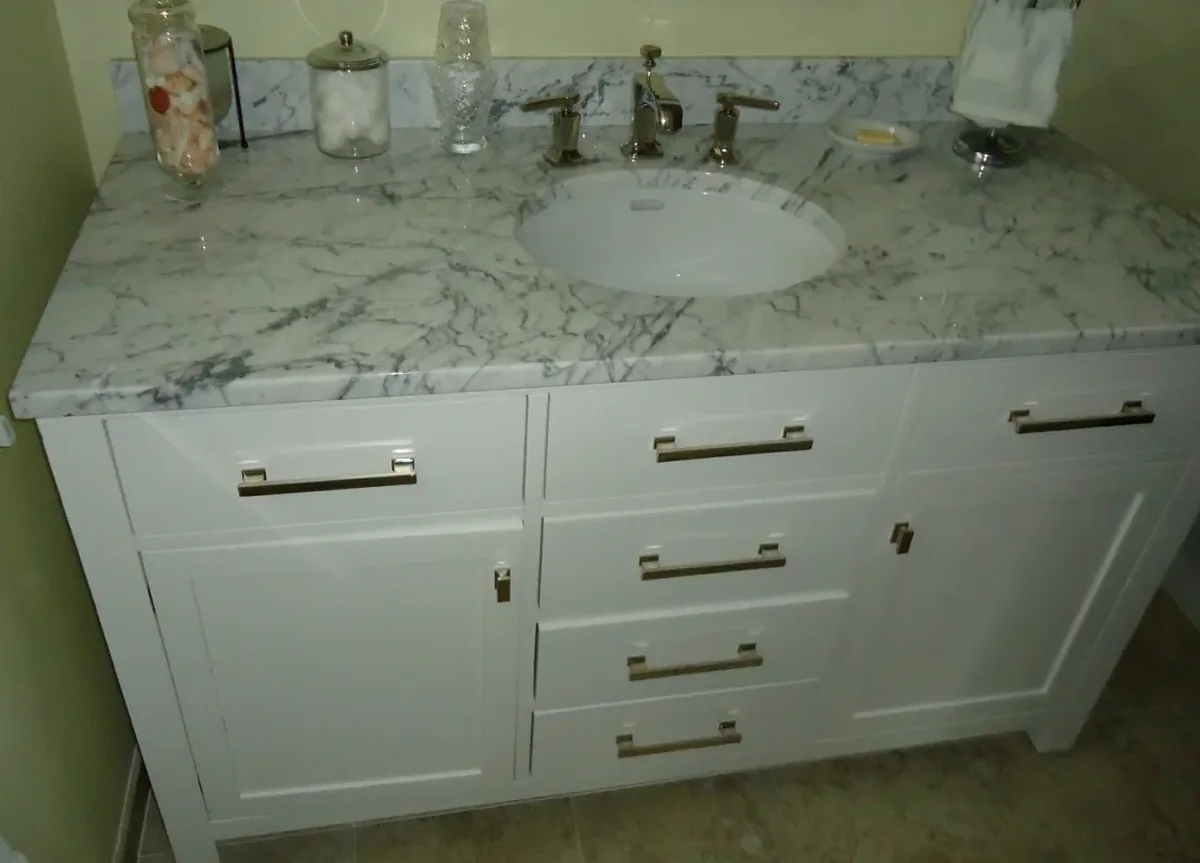
| Standard single | 36 to 48 in | One box, often with a drawer stack to one side of the plumbing and a door cupboard under the bowl. |
| Double | 60 to 72 in | Two or three boxes: a bowl cabinet each end and a drawer bank between, which is where the real storage lives. |
Widths are what fits typical Santa Maria bathrooms. The cost driver is box count and drawer count, not the nominal width.
Two things push a vanity quote up out of proportion to its size. The first is a drawer stack under the bowl, which requires notching or offsetting around the trap and waste, and is genuine custom work. The second is a stone top, which is priced by the fabricator rather than the cabinet maker and is templated off the installed cabinet. The cost guide covers the full set of line items →
Plumbing position decides the cabinet interior
Find the plumbing before you design the interior, because the waste and supply lines dictate what can exist inside the box. If the waste comes through the back wall at a standard height you can usually run a full height drawer stack to one side and a shallow top drawer with a U shaped cut out across the bowl. If the waste comes up through the floor, the centre of the cabinet is spoken for and a door cupboard is the honest answer.
This is the single most common disappointment with a bought vanity. A catalogue vanity is designed around an assumed plumbing position, so when it meets a real bathroom the drawers either will not close or come with a shallow false front. A built to measure cabinet is designed around where the pipes actually are.
Clearance, the other measurement people skip
- Door swing. Measure the depth with the bathroom door fully open. A 22 inch deep vanity in a small hall bath can stop the door dead.
- Toilet clearance. A vanity that overhangs toward the toilet makes the room feel smaller and can conflict with fixture spacing requirements.
- Shower door swing, if there is a framed enclosure that opens outward.
- Counter overhang at the ends, which is often an inch each side and is the difference between fitting a 48 inch run and not.
- Height. A standard vanity is lower than a kitchen base. A comfort height vanity is taller, and a vessel bowl on top of either is taller again.
Building a cabinet for a wet room
A bathroom is the wettest environment a cabinet lives in, so the box material matters more here than anywhere else in the house. Plywood is the right choice for a vanity carcass: it holds a screw, it copes with a slow supply line weep, and it does not lose thickness when it gets damp. Particleboard in a vanity base is the material most likely to be found swollen and crumbling ten years later, because a vanity gets splashed from above as well as leaked on from behind.
The sink base floor deserves its own attention. A sealed or laminated floor panel, or a drop in tray, turns a slow leak into a nuisance rather than a replacement. It costs very little at build time and cannot be added later.
Does a vanity swap need a permit in Santa Maria?
Swapping a vanity in the same position generally does not, because the California Residential Code lists "painting, papering, tiling, carpeting, cabinets, counter tops and similar finish work" among the work exempt from permit under section R105.2. A cabinet is a cabinet whether it is in a kitchen or a bathroom.
Moving the plumbing is a different job. Relocating the sink, adding a second bowl where there was one, or rerouting a waste line is plumbing work that needs a permit in its own right, and adding or moving an outlet or a light is electrical work. Local jurisdictions can amend the exempt list, so confirm the specific scope with the City of Santa Maria Building Division, or Santa Barbara County Planning and Development if the property is in Orcutt or another unincorporated area. Full detail and direct links in the permit guide →
Linen cabinets and the rest of the room
The vanity is rarely the only storage problem. A tall linen cabinet built to the same finish, a recessed medicine cabinet sized to the stud bay, or a shallow cabinet over the toilet all use space that otherwise does nothing. Built at the same time as the vanity they share a finish batch and an install visit, which is why doing them together costs meaningfully less than doing them a year apart.
Vanities across the Santa Maria Valley
Bathroom vanity work runs across Orcutt, Nipomo, Lompoc and Guadalupe, with the whole coverage list on the service area page. If the bathroom is part of a bigger project, the kitchen cabinets page and the custom cabinets page cover the rest. When you are ready, request a written quote.