The one sentence difference
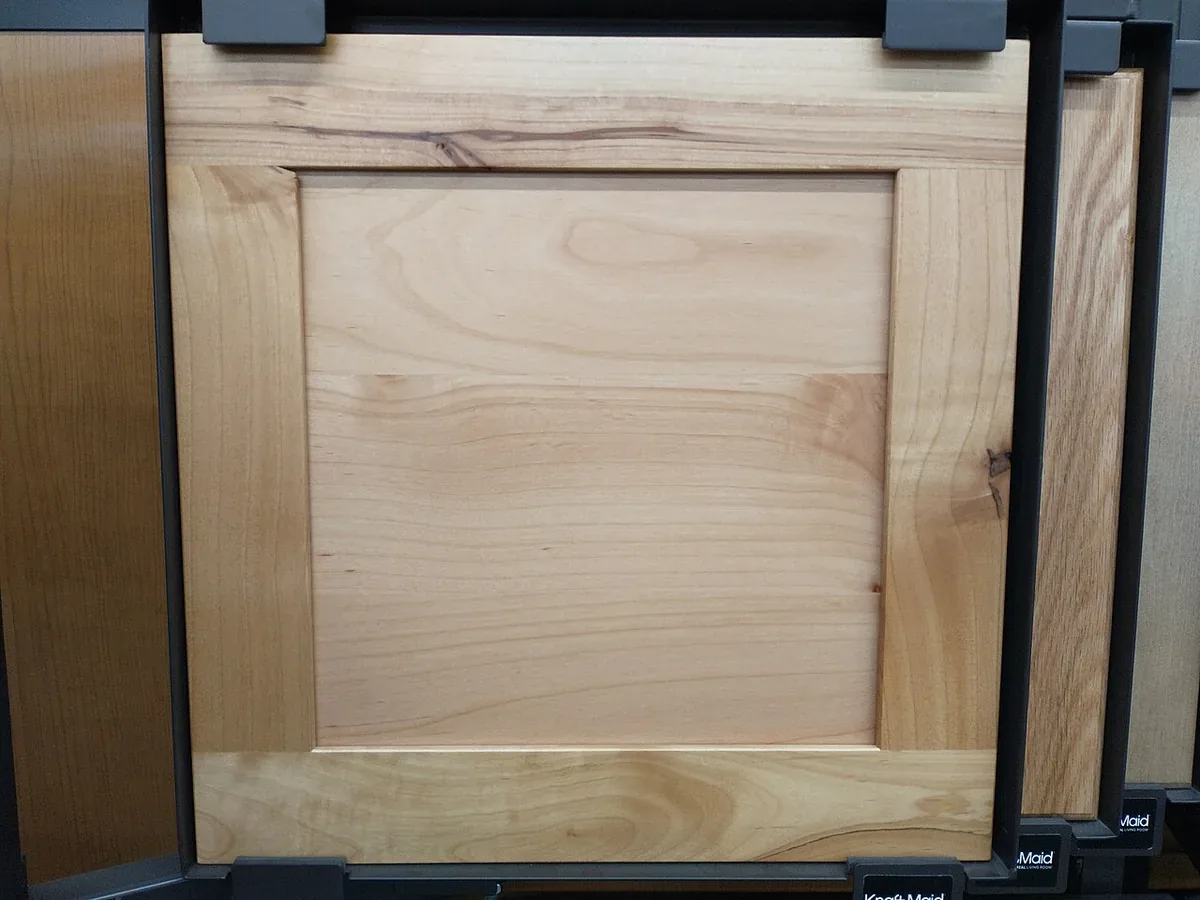
Stock cabinets come in fixed widths and you fill the leftovers with filler strips; semi custom starts from that same catalogue but lets you change sizes and finishes; custom is built to the dimensions somebody measured in your room, with no catalogue at all. Everything else, price, lead time, quality, follows from that one distinction.
| Stock | Semi custom | Custom | |
|---|---|---|---|
| Installed per cabinet | $75 to $400 | $150 to $900 | $500 to $1,400 |
| Sizes | Fixed, normally 3 in steps | Catalogue sizes, modifiable | Any dimension |
| Finishes | A short list | A longer list | Anything |
| Interior fittings | Limited | Some options | Anything |
| Fillers needed | Often, sometimes several | Fewer | Rarely |
| Availability | Off the shelf or short order | Made to order | Made to order |
Per cabinet figures: Thumbtack cost data, national. The rest is how the tiers are defined rather than a price.
Stock cabinets
Stock is the right answer in a square room where the plan was drawn around the catalogue. Cabinets arrive in fixed widths, usually 3 inch increments, and the design work is choosing which of those widths adds up closest to your wall. At $75 to $400 per cabinet installed, stock is between a quarter and a seventh of custom, and in a post 2000 tract home with square walls a stock kitchen can look genuinely good.
The cost is fit and interiors. When 3 inch steps do not add up to your wall, the difference appears as a filler strip: a blank piece of matching material that fills the gap and stores nothing. Interiors are limited to what the catalogue offers, so a corner tends to become a dead void behind a false front, and base cabinets are mostly doors with a fixed shelf rather than drawers.
Where stock stops helping
- Out of square walls, which are normal in mid century Santa Maria housing. A stock run scribed to a wavy wall still leaves a tapering gap at the top.
- Ceiling heights that change across a room, which no fixed upper height accommodates.
- Appliance surrounds for anything that is not a standard size.
- Any run where you care about the last 2 inches, which is most runs in a small kitchen.
Semi custom cabinets
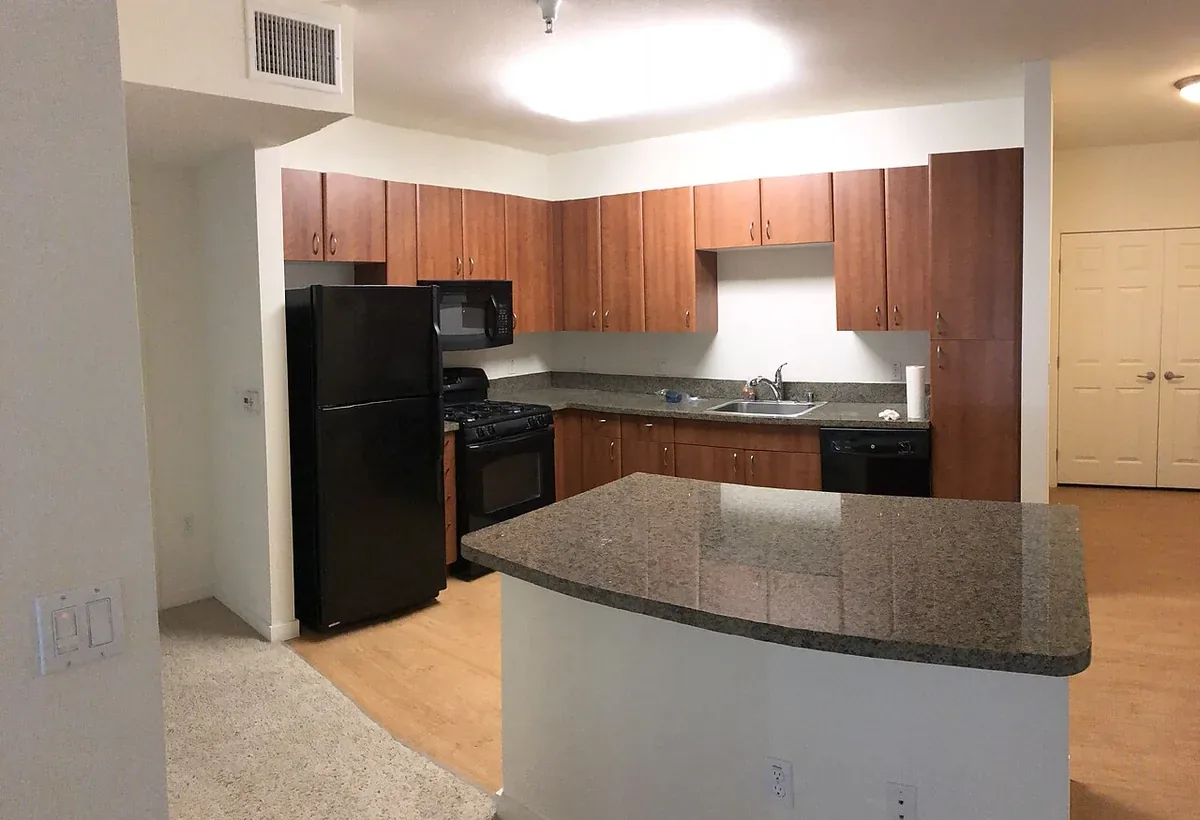
Semi custom is the pragmatic middle and covers most real kitchens. It starts from a manufacturer's catalogue, so the construction, hardware and finishes are standardised, but you can order modified widths and depths, choose from a much longer finish list, and specify interior fittings such as roll outs, a trash pull out or a spice rack. Installed, Thumbtack puts it at $150 to $900 per cabinet.
The limit is that you are still working inside somebody else's system. Modifications come from a defined list of allowable changes, there are widths the line simply does not make, and a genuinely odd requirement, a 19 inch cabinet, a non standard height, an appliance panel for something unusual, can hit a wall. Ask what the modification list actually contains before assuming a size is available.
Custom cabinets
Custom is what you buy when the room refuses to fit a grid. Boxes are built to measured dimensions, so the run ends where your wall ends, the cabinet beside the range is the width it needs to be, the corner gets a purpose built solution, and the uppers go to a ceiling that is not level. At $500 to $1,400 per cabinet installed it is the most expensive tier by a wide margin, and the premium buys fit rather than decoration.
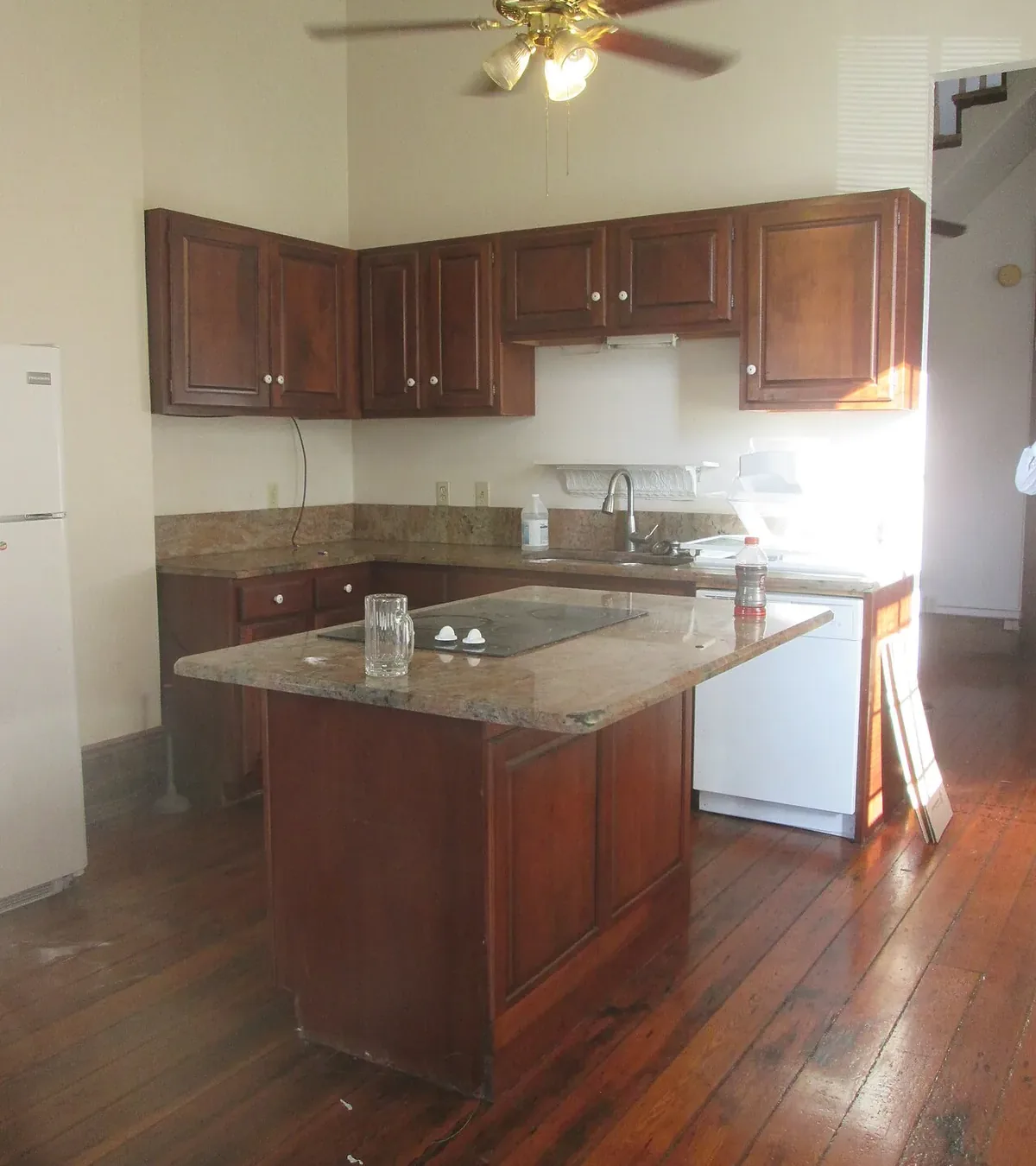
The honest version is that custom is often overspecified. In a square tract kitchen with sound builder cabinets, the money is usually better spent on refacing plus interior upgrades than on custom replacement. Custom earns its price in older housing, in odd shaped rooms, and where you want something a catalogue does not sell. More on custom cabinet work →
What the boxes should be made of
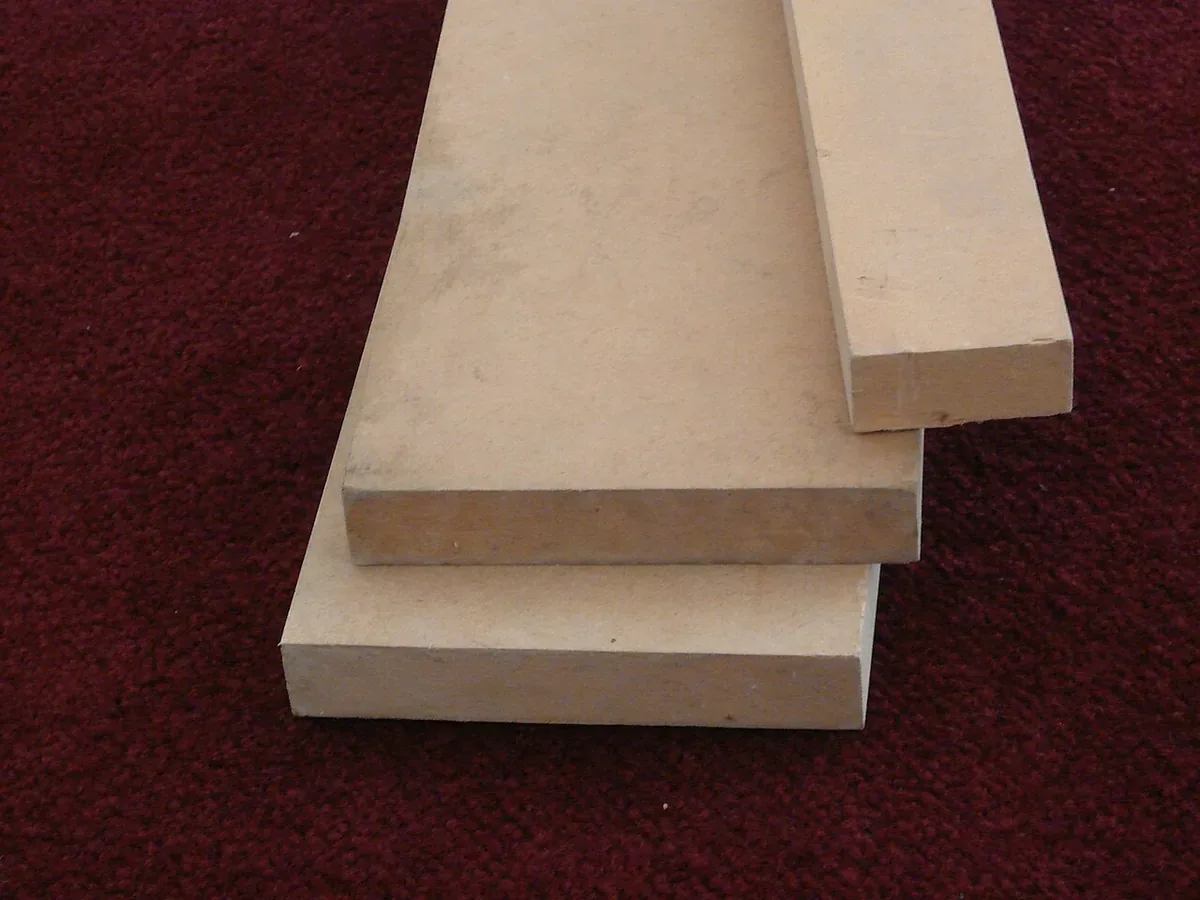
Ask about box material independently of tier, because it is the box that fails. Almost all cabinet boxes are sheet goods rather than solid lumber, and that is sound engineering: a wide solid wood panel moves with humidity and will eventually cup or split, while a manufactured panel stays flat.
| Material | Best at | Fails at |
|---|---|---|
| Plywood | Holding screws, resisting racking, coping with a slow leak | Cost, and a slightly less flat face than MDF |
| Particleboard | Cost, flatness, taking laminate | Water. Swells permanently and never recovers thickness |
| MDF | Flatness, machined profiles, taking paint | Water, and weight |
| Solid wood | Face frames, door frames, drawer fronts | Wide panels, which move seasonally |
The practical version: plywood boxes, MDF for painted door panels, solid wood for frames and drawer fronts. That combination is what a good cabinet actually is, at any tier.
Formaldehyde: how to read the label
Look for a TSCA Title VI compliance label on any composite wood in the cabinet. The Environmental Protection Agency's formaldehyde emission standards under Title VI of the Toxic Substances Control Act cover hardwood plywood, medium density fibreboard and particleboard, and also cover finished goods containing them, which explicitly includes cabinets. Since 22 March 2019 those products have had to be labelled as TSCA Title VI compliant and certified by an EPA recognised third party certifier.
The federal limits are the same numbers as California's own rule. The California Air Resources Board adopted its Airborne Toxic Control Measure for composite wood products, with Phase 2 limits in force in this state since 2009, and the federal standard was written to match it. That is why a panel will often carry both marks, and why a CARB Phase 2 compliant panel is also TSCA Title VI compliant.
What to actually do with that
- Ask to see the label or the certification on the panel stock, not just an assurance in an email.
- Solid wood is not a composite panel and is not regulated by this rule, so a solid wood face frame carries no such label and does not need one.
- The rule covers imported product too, which is the reason it exists. Cabinets assembled overseas are not exempt.
- Small unventilated rooms are where emissions matter most, so a bathroom vanity is worth asking about as much as a kitchen.
EPA: formaldehyde emission standards for composite wood products →
California Air Resources Board: composite wood products program →
CARB: comparison of the CARB and TSCA Title VI requirements, PDF →
Door styles and hardware, across all three tiers
Door style changes price through machining rather than material. Slab doors are flat with no frame and are cheapest. Shaker doors are a flat panel in a square edged frame and are the safe default. Raised panel doors add profiles to the panel and the frame edges and read more traditional. Beaded and beadboard doors add machining again. Frame width and overlay, full or partial, move the number more than the style name does.
Hardware is where a small budget difference is felt daily. Concealed soft close hinges and full extension soft close drawer slides are worth paying for at any tier, because they are the components you operate several times a day and the ones that fail first on cheap cabinets. Three quarter extension slides leave the back of every drawer permanently out of reach.
How to decide, in four questions
- Are the walls square and the ceiling level? If yes, stock or semi custom will fit. If no, custom stops being a luxury.
- Are the existing boxes sound and is the layout one you like? If both, reface instead of replacing at any tier.
- Is there a size, a corner or an appliance surround that the catalogue cannot produce? If yes, that single item may justify custom for the whole run so the finishes match.
- What is the box material in the quote you are comparing? Compare plywood against plywood before you compare tier against tier.
Where to go next
For the numbers behind every figure here, see the cost guide. For licensing, permits and the contract rules, see the permit and licensing guide. For the work itself, start with kitchen cabinets or bathroom vanities, and when you are ready, request a written quote.