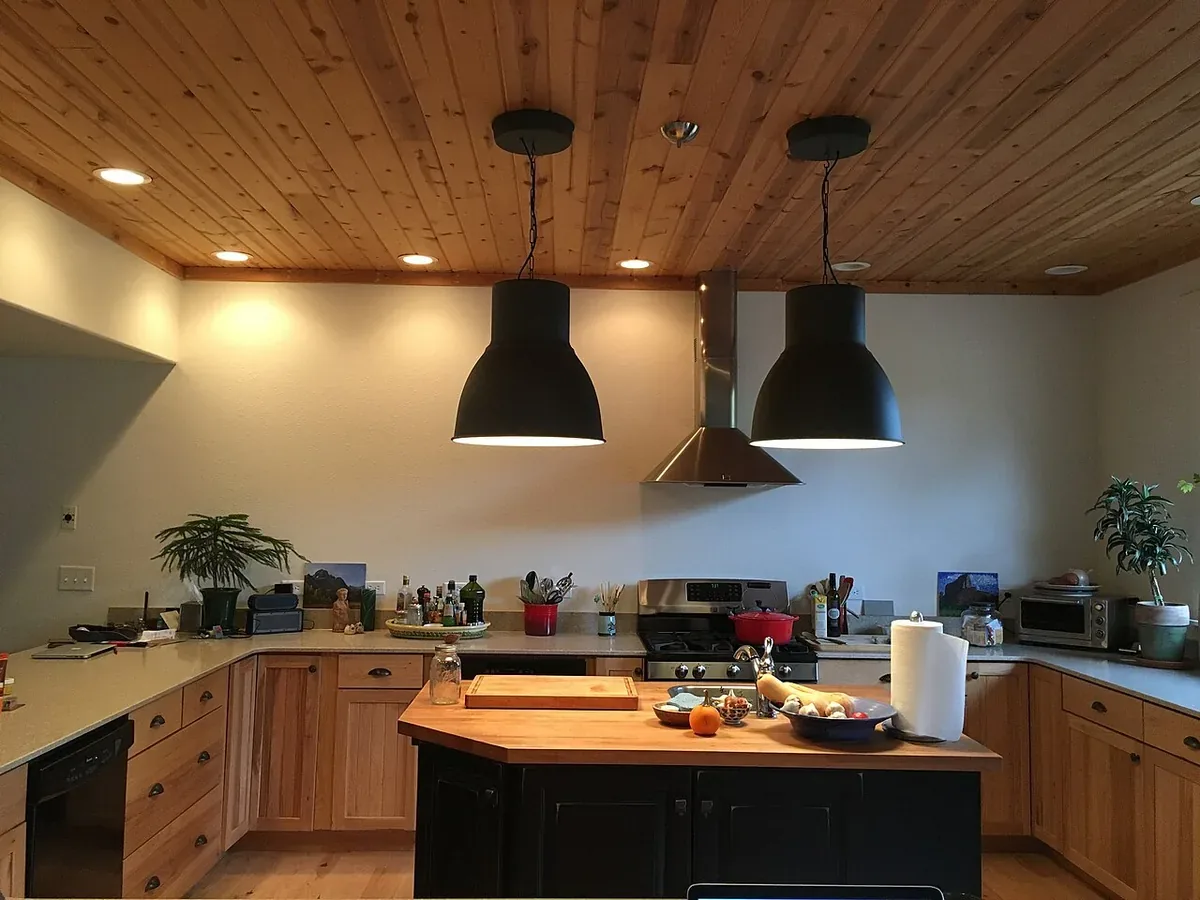
What custom cabinets cost in Santa Maria, CA
Custom cabinets cost $500 to $1,200 per linear foot in California, the range cabinet makers publish statewide, with luxury solid hardwood work running above $1,500 per linear foot. Central Coast labour sits below Los Angeles and Bay Area rates, so Santa Maria quotes normally land in the lower half of that band rather than the top. These are California and national published ranges rather than Santa Maria specific quotes, and their job is to tell you whether a number somebody has handed you is sane.
A second way to sanity check a quote is per cabinet installed. Thumbtack's cost data puts stock cabinets at $75 to $400 each installed, semi custom at $150 to $900, and custom at $500 to $1,400. A twenty cabinet kitchen at the bottom of the custom band is therefore around $10,000 and at the top around $28,000, before counters, appliances, flooring or any electrical work. Thumbtack's whole project figure, $1,447 to $5,294 with an average of $2,817, looks far lower than that because it counts single vanity swaps and small built ins alongside whole kitchens.
| Tier | Installed per cabinet | What you actually control |
|---|---|---|
| Stock | $75 to $400 | Door style and finish from a fixed catalogue. Widths are fixed, normally in 3 inch steps. |
| Semi custom | $150 to $900 | Catalogue base, with size changes, more finishes and some interior fittings available. |
| Custom | $500 to $1,400 | Everything. Built to measured dimensions, no catalogue grid, no forced fillers. |
Source: Thumbtack cost data, national figures. Use them to test a quote, not as a Santa Maria price list.
Material is the other big lever. For a standard sized kitchen Thumbtack puts solid hardwood at $5,000 to $25,000, wood veneer at $1,900 to $13,000, and laminate at $4,000 to $15,000. Maple, cherry, oak and pine all live inside that hardwood band, so the species you pick moves the number far less than the cabinet count and the door complexity do.
Then there are the line items people forget until the invoice. Crown moulding runs about $70 per 8 foot section. Finished ends on exposed cabinets are $100 to $200 each. Removing your existing cabinets is around $300. Installing the boxes themselves is roughly $100 per box on top of the cabinets. None of that is padding, but all of it belongs on the written quote rather than appearing later. The full cost guide breaks every line down →
Custom, semi custom and stock: what actually separates them
The difference between the three tiers is who decides the dimensions. Stock cabinets arrive in fixed widths, usually 3 inch increments, and whatever space is left at the end of a run gets covered by a filler strip. Semi custom starts from the same catalogue but lets you modify sizes, pick from more finishes and add some interior fittings. Custom has no catalogue: the boxes are built to the numbers somebody measured in your room.
Why that matters more in older Santa Maria housing
Fixed widths assume square walls. Santa Maria's housing stock does not cooperate. The older neighbourhoods around downtown and along Broadway carry mid century framing where walls run out of square, ceiling height shifts across a room, and soffits were built to whatever standard the original crew worked to. Post 2000 tract construction on the east and north sides is far more consistent, and stock or semi custom often fits those kitchens perfectly well.
Which is the honest version of the advice: custom is not automatically the right answer. It is the right answer when the room refuses to cooperate with a grid, when you want a run to end at the wall rather than in a filler, when a corner needs a purpose built solution instead of a dead void behind a false front, or when you want an appliance surround, a pantry or an island that no catalogue offers at the size you have.
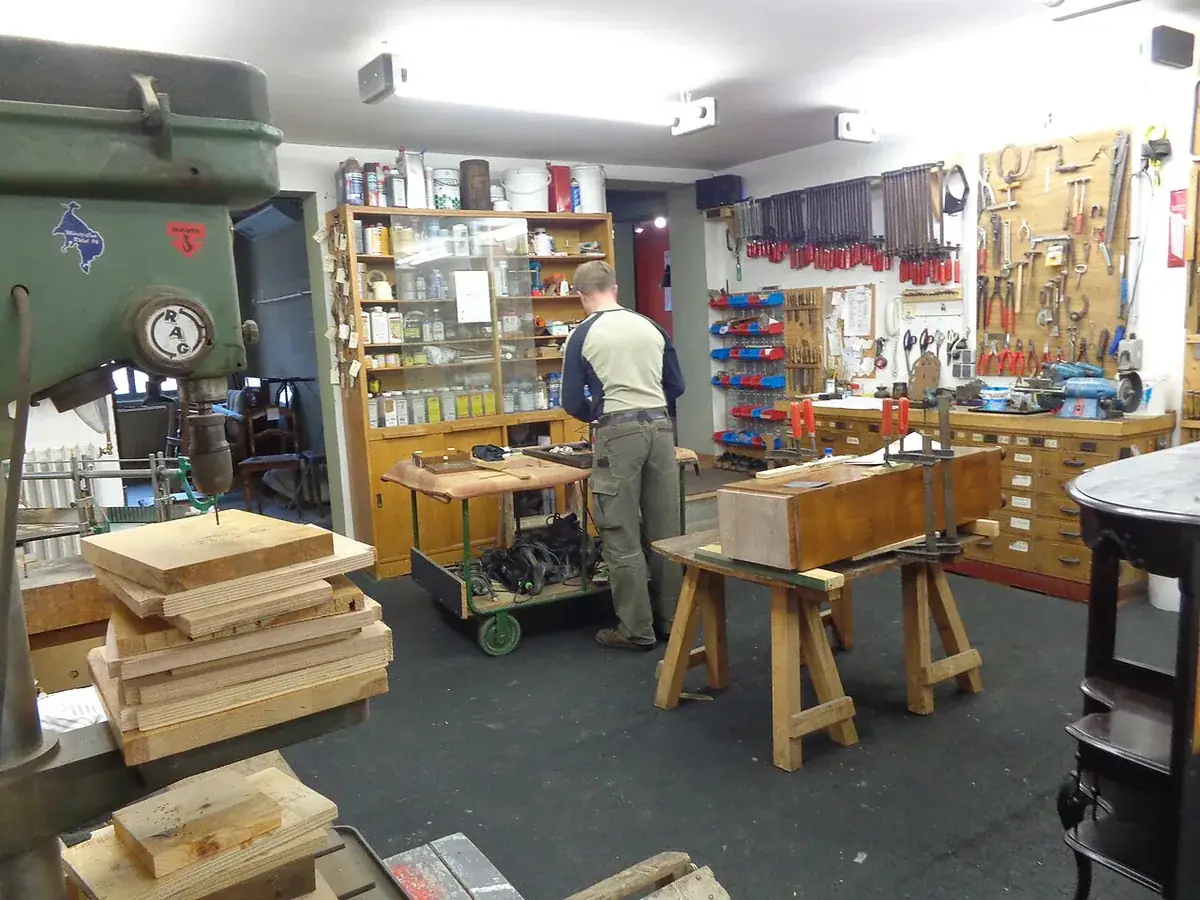
What the boxes should be made of
Ask what the boxes are made of, not just what the doors are, because the box is what fails. Most cabinet boxes are sheet goods rather than solid lumber, and that is normal engineering rather than a shortcut: a wide solid wood panel moves with humidity and will eventually split or cup, while a properly made panel stays flat.
Plywood
Plywood is the durable choice for a cabinet box. Cross banded plies hold a screw, resist racking when the box is lifted and shimmed, and cope far better with the slow supply line or disposal leak that eventually happens under every kitchen sink. If you are paying custom prices, plywood boxes are a reasonable thing to insist on and a reasonable thing to see itemised on the quote.
Particleboard and MDF
Particleboard and MDF are flatter, cheaper and better substrates for paint and laminate than plywood is, which is why even good cabinets use MDF for painted door panels. Their weakness is water: once a particleboard sink base gets wet it swells and never recovers, and no amount of drying brings the thickness back. If you have ever opened a sink cabinet and found a crumbling, humped floor, that is what you were looking at.
Solid wood
Solid wood does its best work in narrow pieces: face frames, door stiles and rails, drawer fronts and mouldings. Those are dimensions where seasonal movement is small and manageable. A five piece door with an MDF centre panel and solid wood frame is not a compromise, it is the design that stays flat.
Door styles, and what changes the price
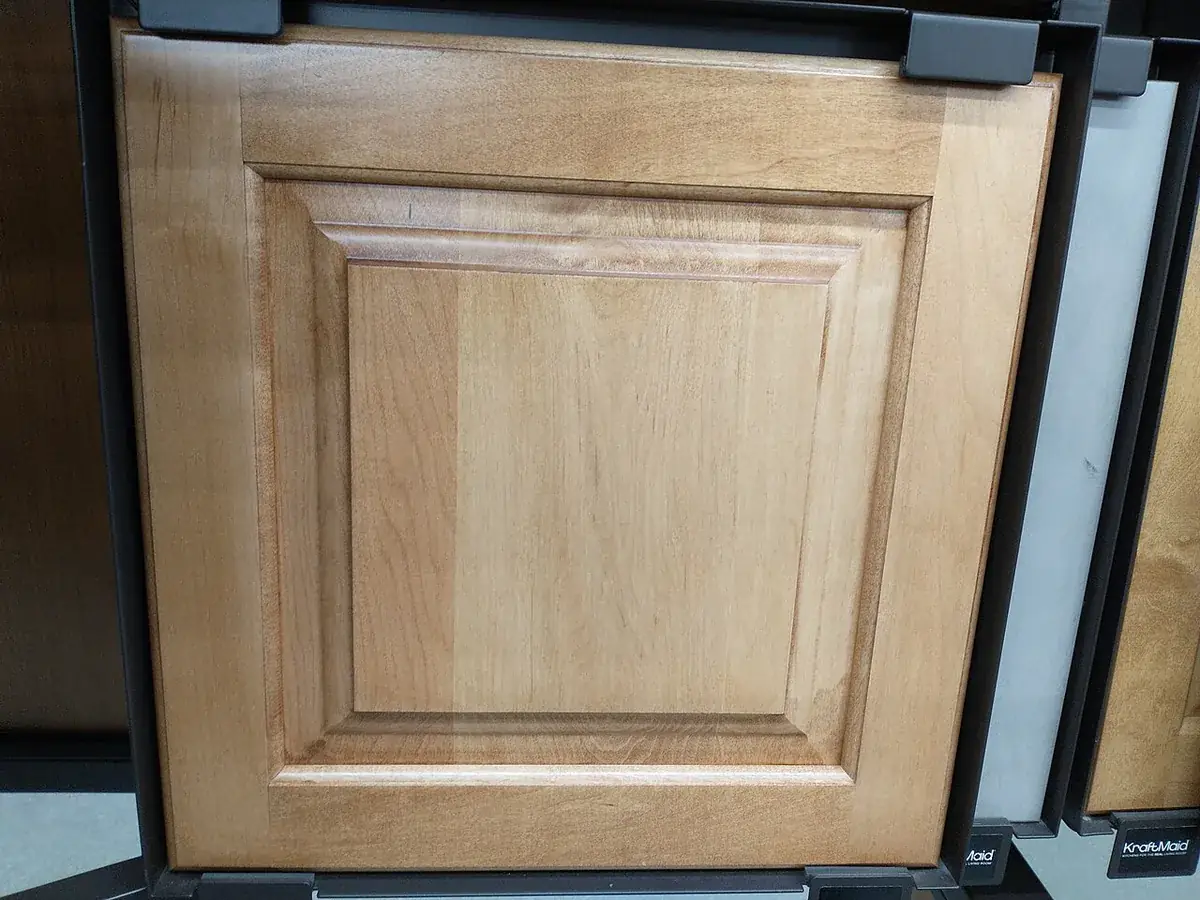
Door style changes the price more through machining than through material. A slab door is a flat panel with no frame, cheapest to make and the most modern looking. A shaker door is a flat centre panel inside a square edged frame, the safe default across most Santa Maria housing stock. A raised panel door adds a profiled centre panel and profiled frame edges, reads more traditional, and collects more dust in the profiles. Beaded and beadboard doors add further machining again.
Two details move the number more than the style name does. Frame width: a wide stile door uses more material and more machining than a narrow one. And overlay: full overlay doors sit almost edge to edge and need tighter tolerances than a partial overlay door that leaves face frame showing. Neither is better, but a quote that does not say which you are getting is not a finished quote.
Hardware: the part you touch every day
Spend the money on hinges and slides, not on the pulls. Concealed soft close hinges and full extension soft close drawer slides are the two components you operate several times a day and the two that fail first on cheap cabinets. Full extension matters practically as well: a three quarter extension slide leaves the back of every drawer permanently out of reach.
Pulls and knobs run from a few dollars each to well over thirty, and a normal kitchen needs around thirty of them, so the spread between a budget and a designer choice is real money. What matters on the quote is whether hinges, slides and pulls are included at a stated specification or carried as an unnamed allowance you will be topping up later.
Do you need a permit for cabinets in Santa Maria?
Usually not, because the California Residential Code lists "painting, papering, tiling, carpeting, cabinets, counter tops and similar finish work" among the work exempt from permit under Section R105.2. Replacing cabinets inside the same footprint is finish work and generally needs no permit.
The exemption stops the moment the scope grows. Moving a sink means plumbing work. Adding or relocating circuits, outlets or under cabinet lighting means electrical work. Moving a gas line for a range is gas work. Each of those is permitted work in its own right, and the cabinet exemption does nothing for them. Local jurisdictions can also amend the exempt list, and some California cities have, so the only safe move is to confirm your specific scope with the City of Santa Maria Building Division, or with Santa Barbara County Planning and Development if the property is in Orcutt, Sisquoc or another unincorporated area. The permit and licensing guide has the detail and the direct links →
What California requires before work starts
A written, signed contract, a licence you can verify, and a deposit that is capped by statute. These are not preferences, they are Business and Professions Code, and they are the clearest way to sort a real cabinet contractor from somebody who is not one.
- A licence. Section 7048 exempts unlicensed work only where the aggregate contract price for labour, materials and all other items is less than $1,000, the work is casual, minor or inconsequential, and no building permit is required. A kitchen is past that on all counts. The specialty classification for this trade is C-6, Cabinet, Millwork and Finish Carpentry.
- A written contract. Section 7159 applies where the aggregate contract price exceeds $500 and requires the contract and every change order to be in writing and signed before that work begins, with approximate start and completion dates and a Mechanics Lien Warning.
- A legal deposit. Section 7159.5 states the downpayment shall not exceed $1,000 or 10 percent of the contract amount, whichever amount is less. On a $30,000 kitchen that is $1,000, not $3,000 and certainly not half.
- Payments that track the work. The same section says a contractor shall neither request nor accept payment that exceeds the value of the work performed or material delivered.
- A cancellation notice, where it applies. The Three Day Right to Cancel gives you until midnight of the third business day after you received a signed and dated copy of the contract that includes the notice. Seniors get a Five Day Right to Cancel. It does not apply when the contract is negotiated at the contractor's place of business, so a showroom signing may carry no window at all.
How the project runs
Seven stages, in this order. The two people skip and later regret are the in home measure and the itemised written scope, and California law effectively requires the second anyway.
- 1In home measure
Wall lengths, out of square corners, soffit height, window and door casing, appliance sizes, and where the waste stack and gas line physically sit. In a 1950s or 1960s Santa Maria house none of that matches the floor plan, which is the whole reason custom exists.
- 2Drawn layout and itemised quote
A drawing plus a cabinet by cabinet scope: every box size, box material, door style, finish, hardware and what the installation covers. California requires a written home improvement contract above $500 under Business and Professions Code 7159, with approximate start and completion dates on it.
- 3Box material and door selection
Box material first, because it decides durability, then door style, because it decides price. Plywood boxes hold a screw and survive a slow sink leak. Particleboard and MDF are flatter and cheaper and take paint and laminate well, but swell permanently once wet.
- 4Shop build
Boxes, face frames, doors and drawer boxes are cut and assembled to your dimensions. Nothing is pulled from a catalogue in fixed 3 inch widths, so the run ends at your wall instead of ending in a filler strip.
- 5Finish and cure
Stain, paint or clear coat is sprayed in the shop and left to cure before anything is stacked or handled. A shop finish is more even and harder than anything brushed on in a lived in kitchen.
- 6Installation
Old cabinets out, studs located, a level line struck off the highest point of the floor, uppers hung before bases. Boxes are shimmed plumb, screwed to studs and to each other, then doors and drawers are hung and the soft close hardware is adjusted.
- 7Counter template and punch list
Stone and quartz counters are templated off the installed cabinets rather than off the drawing. Then door alignment, drawer travel, scribe moulding against the walls, toe kick and end fillers.
Why Santa Maria is a custom cabinet market
Santa Maria is the largest city in Santa Barbara County, with 109,707 residents at the 2020 Census, and the valley around it adds Orcutt, Sisquoc, Guadalupe, Los Alamos and Lompoc, plus Nipomo across the river in San Luis Obispo County. That is a large enough base of housing, and a varied enough one, that the same trade has to serve two quite different jobs.
On one side, older stock near downtown and along the Broadway corridor where walls are out of square and a catalogue cabinet leaves gaps. On the other, newer tract housing where the kitchens are square, the cabinets are builder grade, and the owner wants better boxes and a better layout rather than a rescue job. Custom answers the first well and is often overspecified for the second, where refacing or good semi custom is the smarter buy.
Locally, stock and semi custom cabinets are easy to buy: the big box stores carry them and there are MasterBrand dealers in the area. What is harder to buy well is the custom end, where the fit depends entirely on whether somebody measured the room properly and whether the contract says what you are getting. That is the gap this site exists to close.
Where to go next
If you know the room, go to the service page for it: kitchen cabinets, bathroom vanities, cabinet refacing or cabinet installation. If you are still working out the budget, start with the cost guide. For coverage across the valley see the service area, and when you are ready, request a written quote.